
Breast cancer fundraising ideas at work

A bake sale, a pink dress-down day or a lunchtime quiz can give colleagues an easy way to support a breast cancer charity. For a small team’s first fundraiser, we’d choose one activity, agree who will organise it and decide how the money will reach the charity before inviting everyone to join.
At Beat Breast Cancer, we fund equipment and research for NHS breast cancer units. These ideas will help you plan a fundraiser for us, whether your colleagues share an office, work different shifts or join from home.
October is a useful time to bring people together around the cause, but you can fundraise throughout the year. Our Breast Cancer Awareness Month guide covers the wider campaign. Here, we’ll focus on getting your team’s event organised.
Six breast cancer fundraising ideas for your team
1. Hold a pink dress-down day
Invite colleagues to wear something pink and make a voluntary donation. A scarf, shirt or pair of socks is enough; nobody needs to buy a new outfit to join in.
Agree the date with your manager, particularly if uniforms or protective clothing are part of the job. Share the donation link in your staff message so people on leave or working remotely can contribute too. Keep both dressing up and donating optional, and avoid publishing who has given what.
2. Organise a bake sale with a clear budget
Choose a break time when colleagues can stop by, find a suitable table and ask a few volunteers what they can bring. Find out who will cover ingredients and supplies before setting prices.
Ask bakers to bring a recipe or ingredient list, retain packaging for bought items and make that information available at the table. Store and handle food safely. The Food Standards Agency’s guidance for charity events explains food safety and allergen information in more detail.
A small sale with manageable costs is a sensible starting point. You can always run another if colleagues want to help again.
3. Run a lunchtime quiz
A short quiz suits a team that enjoys a bit of friendly competition. Choose a mix of topics, such as music, general knowledge and local places, and let people join in teams.
For a hybrid workplace, share the questions on a video call and let remote colleagues submit answers in the same way as everyone else. Decide whether you’re charging an entry fee or inviting optional donations, then make that clear in the invitation. They are different types of payment, including for Gift Aid purposes.
You don’t need to buy prizes. Bragging rights until the next quiz may be enough for your team.
4. Plan a sponsored team activity
Choose an activity people can adapt to their own circumstances: a walk, a cycle or a personal challenge with a shared finish date. Ask participants what would work for them before setting distances or targets.
Give colleagues other ways to help, such as organising the event or sharing the fundraising link. Participation should never depend on someone’s fitness or willingness to discuss their health.
Tell supporters in advance what will happen to their donations if the challenge cannot be completed. The Charity Commission and Fundraising Regulator’s fundraising guidance explains why this needs to be part of the plan.
5. Share a skill over lunch
Ask whether a colleague would like to run a short session on something they enjoy: photography, drawing, a craft or getting more out of a spreadsheet. Invite voluntary donations and keep the session open to colleagues who cannot give.
Check whether materials are needed and who will pay for them. A session that uses things you already have avoids leaving the organiser out of pocket. Offer a remote option where it makes sense, and agree with the presenter before recording anything.
6. Ask about employer matching
Speak to your manager or HR team before the event to find out whether the business will match staff fundraising. Ask about the maximum amount, which activities qualify and how the company will send its contribution.
Only advertise matching once it has been confirmed. If the employer cannot match donations, they might be willing to cover ingredients, printing or other agreed event costs instead.
More breast cancer fundraising ideas for work
If none of the six suits your team, or you want a second event later in the year, these event ideas work in most workplaces.
- Raffle or sweepstake. Donated prizes keep the costs down, and a sweepstake on a big sporting event is easy to run. There are legal rules for both, explained below.
- Guess the number. Fill a jar with sweets or bake a cake and charge a small amount per guess. The closest guess wins the jar or the cake.
- Auction of promises. Colleagues offer a skill or a favour, such as a home-cooked meal, an hour of gardening or help with a CV, and others bid for it over a week.
- Preloved sale. Colleagues bring books, plants or homeware they no longer need and sell them from a table in a shared space.
- Five-a-side or inter-department match. Charge a small entry fee per team and invite colleagues to watch and donate.
- Lunchtime talent show. Colleagues perform for a few minutes each and the audience votes with donations.
A raffle or sweepstake run only among colleagues who work at the same site is a work lottery, and you don’t need a licence. Tickets must be physical, cost the same and be sold in person at work, never online or by email, and they can’t be passed on to someone else. The draw has to take place on the premises. The money can cover reasonable costs and prizes, with the rest going to the charity, and prizes can’t roll over to another draw.
If the raffle is part of a one-off event instead, such as a fundraising lunch open to visitors, it must be a side attraction rather than the reason for the event, and it must raise money for charity. Tickets can only be sold at the event while it is taking place, and you can take no more than £100 from the proceeds for expenses and £500 for bought prizes. Donated prizes have no limit, and prizes can’t roll over.
These rules apply in England, Scotland and Wales; Northern Ireland has its own. The Gambling Commission explains both in its guidance on running a lottery with people you work with and raffles at events.
Breast cancer fundraiser name ideas for your team
A name gives your event something to put on posters and in the staff newsletter. A few to start from:
- Beat It Together
- Full Support
- Strength in Numbers
- One Team, One Cause
- Hope in Every Pound
Or build one from your activity, your team and the charity’s name, such as the Finance Team Pink Quiz or Steps for Beat Breast Cancer. Naming the charity makes it clear where the money is going. Avoid the names of other charities’ events, such as Wear It Pink or Race for Life, so nobody thinks they are giving to a different charity.
Set a target after checking your costs
Start with the amount you hope to send to the charity, then work out what your activity might raise and what it will cost. Keep any employer contribution separate until it is agreed.
Here is an illustrative example for a small workplace fundraiser. It is not a previous Beat Breast Cancer event or a forecast of what your team will raise.
| Item | Example amount |
|---|---|
| 20 colleagues each give £3 voluntarily | £60 |
| Bake sale takings | £70 |
| Ingredients and supplies paid from the takings | -£20 |
| Amount sent to the charity | £110 |
This example includes no Gift Aid or employer matching. If the employer pays the £20 of costs separately, the full £130 collected could be sent to the charity.
Be clear from the outset if you intend to take expenses from the money raised. Our 100% donation policy describes how Beat Breast Cancer uses the donations it receives; your event’s costs need their own explanation.
A checklist for organising the fundraiser
If you’re starting a breast cancer fundraiser for the first time, work through these steps in order. The first two conversations, with your manager and with us, are the ones that save problems later. We don’t offer personal online fundraising pages at the moment, so ask us which donation link to share with your team.
- Agree the activity, date and use of work time or space with your manager.
- Contact the charity before promoting the event to confirm the donation route and how to identify your team’s fundraising.
- Name the charity clearly in your invitation, explain what you are raising money for and state any costs you will deduct.
- Give one person responsibility for the records and arrange help with collecting or counting cash if needed.
- Include colleagues on different shifts or working from home, and keep participation voluntary.
- Send the proceeds promptly, keep confirmation of the transfer and thank everyone with the amount actually sent.
Keep the invitation considerate. Some colleagues may have a personal connection to breast cancer and others may prefer not to discuss it. Nobody needs to share a story or appear in an event photograph to take part.
Free sponsor form and posters
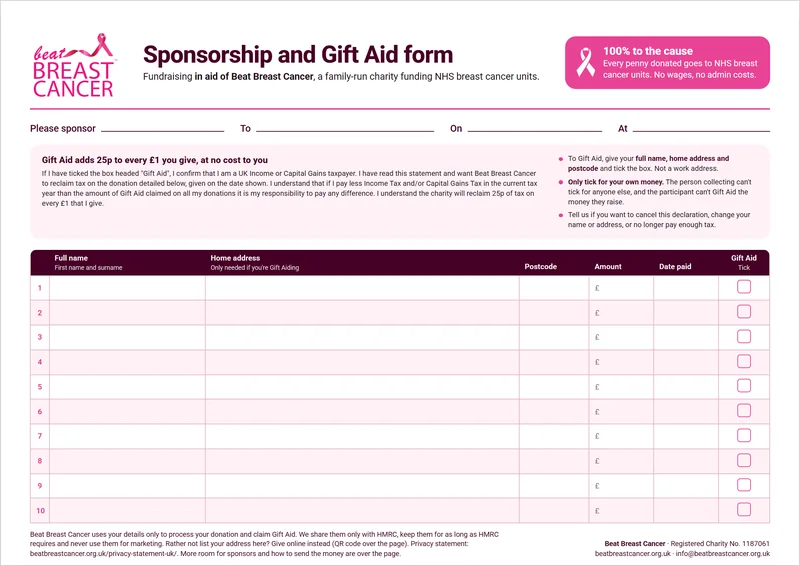
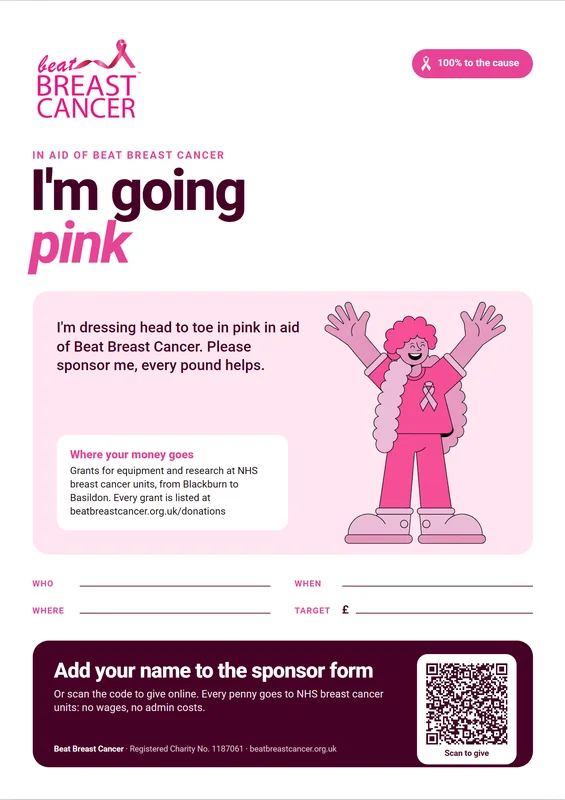
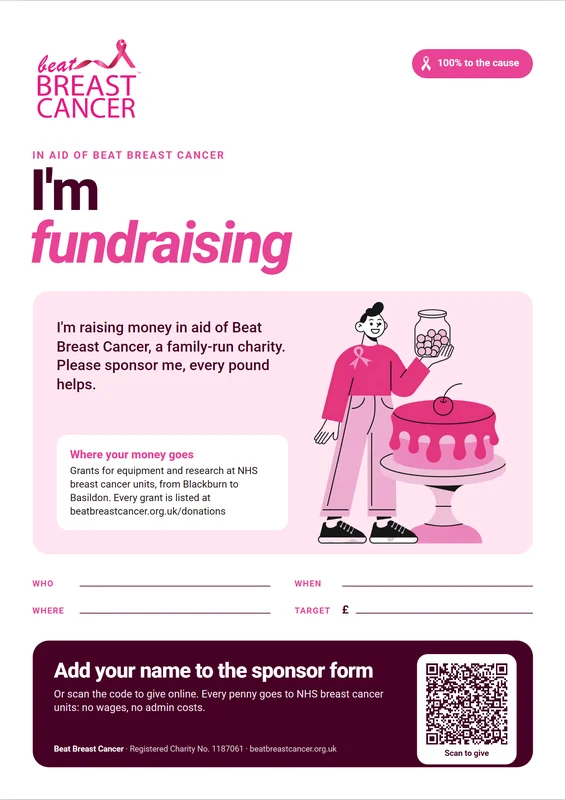
You don’t need to make your own. Download our sponsor form and posters, type in the name, date and place, then print them at work. You can also print them blank and fill them in by hand. The sponsor form includes the Gift Aid declaration and explains how to send us the money.
Raising awareness at work as well as money
An awareness day doesn’t have to involve money at all. These three can sit alongside your fundraiser.
- Share the NHS guide to checking your breasts or chest in the staff newsletter or on a noticeboard.
- Remind colleagues to look out for their NHS breast screening invitation. The NHS page on breast screening explains who is invited and what happens.
- If a colleague is going through treatment, point managers to Macmillan’s guidance for employers on supporting someone with cancer at work.
Keep it simple and factual, and link to the NHS rather than giving health advice yourself.
Sending the money to Beat Breast Cancer
For an individual’s own gift, our donation page provides an online form and other ways to give. If you’re collecting event proceeds, speak to us first so we can confirm how to send and identify the payment. Keep a record of takings, agreed expenses and the amount transferred.
Gift Aid needs particular care with workplace collections. Do not tick a Gift Aid declaration in your own name for money collected from colleagues. HMRC’s guidance on charity collections says the individual donors must make their own declarations for eligible collection donations. Payments for goods, compulsory event entry fees and company donations are not personal Gift Aid donations. See HMRC’s Gift Aid eligibility guidance before treating event proceeds as gifts.
If someone wants to give their own money separately, they can read our Gift Aid guide and check whether they meet the declaration’s conditions. Keep those individual gifts separate from the event total in your records so they are not counted twice.
Show your team what the charity supports
Beat Breast Cancer is a family-run, volunteer-led charity with a 100% donation policy. Donations support equipment and research for NHS breast cancer units, with the charity’s running costs covered separately.
For a concrete example to share with colleagues, in June 2026 we donated £10,000 to Basildon Hospital’s Breast Unit, through Mid and South Essex Hospitals Charity. That is a published grant your team can read about, rather than a promise that a particular fundraising total will buy a specific piece of equipment. New donations are pooled to support our work.
Tell us about your workplace fundraiser with your proposed activity, date and organisation’s name, so we can discuss the next steps before you start collecting.